
by Sumaya Aziz
Search is evolving faster than ever, and SEO in 2026 looks very different from what it did just a few years ago. Traditional keyword optimization is no longer enough to secure visibility in search results. Today, AI-powered search engines, generative search experiences, and answer-focused platforms are changing how users discover information online.
As search technology advances, we need to adapt our strategies to remain competitive. The future belongs to websites that optimize not only for search engines but also for AI systems and user experience. This is where concepts like Answer Engine Optimization (AEO), Generative Engine Optimization (GEO), and Search Experience Optimization (SXO) become essential.
What Is SEO in 2026?
SEO in 2026 refers to the process of optimizing content for traditional search engines, AI-powered answer engines, and generative search platforms simultaneously.
While Google remains a dominant search engine, users increasingly rely on AI assistants and conversational search tools to get direct answers. As a result, rankings alone are no longer the only measure of success.
We must optimize content for:
- Search engine rankings
- AI-generated answers
- Featured snippets
- User experience
- Brand authority and trust
How SEO Has Changed Since Traditional Search
Traditional SEO focused heavily on:
- Keywords
- Backlinks
- Meta tags
- Search rankings
Today, search algorithms evaluate content based on:
- Expertise and authority
- User satisfaction
- Content relevance
- AI readability
- Structured information
The shift means we need to create content that serves both human readers and AI systems.
Why AI Is Transforming Search Results
AI-powered search tools analyze content differently than traditional search engines. Instead of presenting only a list of links, they generate direct answers.
Users now expect:
- Instant responses
- Conversational answers
- Personalized recommendations
- Reliable information
Because of this shift, businesses that optimize for AI search have a greater chance of gaining visibility.
What Is Answer Engine Optimization (AEO)?
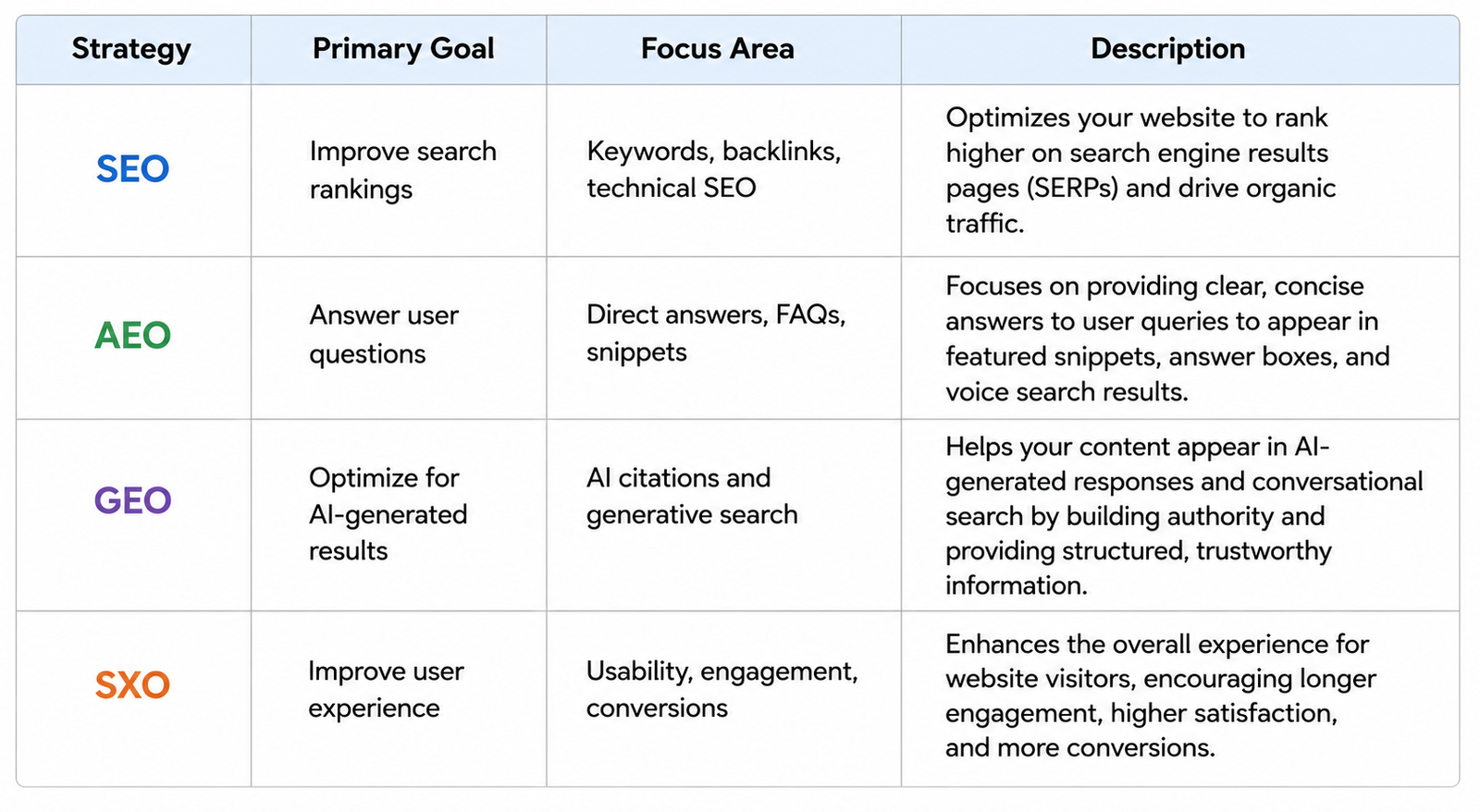
Answer Engine Optimization (AEO) is the practice of creating content that provides direct, concise answers to user questions. AEO focuses on helping search engines and AI assistants quickly understand and display your content.
How AEO Works in AI Search
When users ask a question, AI systems scan trusted sources to generate an answer.
For example:
Question:
“What is SEO in 2026?”
A well-optimized article may be selected as the source of the answer.
AEO helps increase the chances that your content becomes part of these AI-generated responses.
Best Practices for AEO Optimization
To improve AEO performance:
- Answer questions clearly and directly
- Use FAQ sections
- Add schema markup
- Structure content with headings
- Include concise definitions
- Use bullet points where appropriate
The easier your content is to understand, the more likely it is to be used by answer engines.
What Is Generative Engine Optimization (GEO)?
Generative Engine Optimization (GEO) focuses on optimizing content for AI systems that generate responses rather than simply ranking web pages. As AI-powered search becomes more common, GEO is becoming a critical part of digital marketing.
How GEO Helps Brands Appear in AI Responses
Generative AI platforms gather information from multiple trusted sources before producing an answer. If your content is authoritative and well-structured, it may be cited or referenced in AI-generated responses.
Benefits of GEO include:
- Increased brand visibility
- More authority signals
- Better trust among users
- Additional traffic opportunities
GEO Ranking Factors in 2026
Several factors influence GEO success:
High-Quality Content
AI systems prefer comprehensive and accurate content.
Authoritative Sources
Content supported by credible references gains more trust.
Topical Expertise
Publishing multiple articles around a topic strengthens authority.
Brand Mentions
Consistent mentions across reputable websites help improve credibility.
Structured Content
Well-organized content is easier for AI systems to interpret.
What Is Search Experience Optimization (SXO)?
Search Experience Optimization (SXO) combines traditional SEO with user experience optimization.
The goal is not only to attract visitors but also to help them achieve their goals efficiently.
Why User Experience Matters More Than Ever
Search engines increasingly measure how users interact with websites. If visitors leave immediately or struggle to navigate your site, rankings may suffer.
Good user experience can improve:
- Engagement
- Time on page
- Conversions
- Trust
- Customer satisfaction
Core Elements of SXO
Key components of SXO include:
Fast Website Speed
Users expect pages to load quickly.
Mobile Optimization
Most searches now happen on mobile devices.
Clear Navigation
Visitors should easily find the information they need.
Readable Content
Simple formatting improves user engagement.
Effective Calls-to-Action
Strong CTAs guide users toward the next step
How to Optimize Content for AI Search Engines
AI search is becoming more sophisticated, and we must adapt accordingly.
Create Direct Answers
Answer important questions early in your content. Clear and concise responses help AI systems understand your information.
Use Structured Data
Schema markup provides additional context to search engines.
Useful schema types include:
- FAQ Schema
- Article Schema
- How-To Schema
- Organization Schema
Structured data improves content visibility across search platforms.
Build Topical Authority
Publishing multiple high-quality articles around a specific topic helps establish expertise.
For example, if your niche is SEO, create supporting content about:
- Keyword research
- Search intent
- Technical SEO
- Content optimization
- AI search strategies
Well-crafted AI prompts can help generate structured content ideas more efficiently. This strengthens your authority within the industry.
Improve E-E-A-T Signals
Google continues to prioritize:
- Experience
- Expertise
- Authoritativeness
- Trustworthiness
You can improve E-E-A-T by:
- Showing author credentials
- Publishing original insights
- Citing reliable sources
- Maintaining accurate content
Trust remains one of the strongest ranking factors.
SEO vs AEO vs GEO vs SXO: What’s the Difference?
What Will Rank Websites in 2026?
The future of SEO depends on more than keywords alone.
Content Quality: Comprehensive, helpful, and original content will remain essential. Content must satisfy user intent better than competing pages.
Brand Authority: Strong brands earn more trust from both users and search systems. Building authority requires consistency and credibility over time.
User Experience: Fast-loading, easy-to-use websites will continue to outperform poor user experiences.
AI Citations and Mentions: AI systems often rely on trusted sources when generating answers.
The more frequently your brand is cited across reputable websites, the greater your visibility may become.
Common SEO Mistakes to Avoid in 2026
Many websites still rely on outdated tactics.
Avoid these common mistakes:
- Publishing low-quality AI-generated content without human review
- Ignoring user experience
- Overusing keywords
- Failing to update outdated content
- Neglecting schema markup
- Creating content without search intent research
- Ignoring brand authority development
- Focusing only on rankings instead of user value
- Many websites still ignore long-tail keywords, reducing their chances of ranking for highly targeted searches.
Successful SEO requires a balanced and user-focused approach.
Conclusion
The future of SEO in 2026 is no longer limited to ranking on traditional search engine results pages. Search is becoming more intelligent and experience-driven. As AI continues to transform how users discover information, we must adapt our strategies accordingly.
By combining AEO, GEO, SXO, and traditional SEO, we can create content that performs across both search engines and AI-powered platforms.
To strengthen your SEO strategy, also read our guides on SEO vs Aeo, keyword difficulty, keyword research step by step and Competitor Keyword Analysis.
Frequently Asked Questions
Q1. Is traditional SEO dead in 2026?
No. Traditional SEO remains important, but it is no longer sufficient on its own. We must combine SEO with AEO, GEO, and SXO to maximize visibility.
Q2. How can small websites rank in AI search?
Small websites can succeed by creating high-quality content, demonstrating expertise, using structured data, and building topical authority within a specific niche.
Q3. Why is SXO important for SEO success?
SXO improves user satisfaction, engagement, and conversions. Search engines increasingly reward websites that provide excellent user experiences.
Q4. Will AI replace traditional search engines?
AI is changing how search works, but traditional search engines are likely to coexist with AI-powered search experiences rather than disappear completely.
Q5. Which optimization strategy should businesses prioritize?
Businesses should adopt a combined approach that includes SEO, AEO, GEO, and SXO to remain competitive in modern search environments.